Date & Location
Tuesday
8 September 2026
13:30
University of Münster
Fürstenberghaus
Domplatz 20–22
48149 Münster
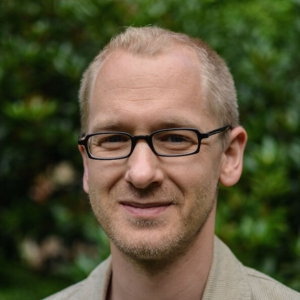
Florian Leese is a Professor and Head of the Aquatic Ecosystem Research Group at the University of Duisburg-Essen. His research focuses on the biodiversity of aquatic ecosystems and how it is affected by anthropogenic stressors. A key part of his work involves developing and applying innovative tools and concepts for monitoring biodiversity and ecosystem state, as well as for assessing and analysing genetic biodiversity data. He also uses molecular markers to study factors affecting the special and temporal occurrence of species populations.
Talk: From a simple idea to global biodiversity observation: the (e)DNA revolution and its unfinished business
Over twenty years ago, a simple proposal — identify an animal from a short, standardised gene fragment — met a discipline running out of capacity. Morphological identification could not keep pace with the vast numbers of new species reported worldwide, growing monitoring demands, or with shrinking taxonomic expertise. At the same time, animal biodiversity loss accelerated drastically. The new approach, termed "DNA barcoding", offered a solution, and over two decades it grew beyond its original idea into a global observation network. With the advent of identifying many specimens in a bulk sample — or merely from traces in environmental samples, i.e. via "eDNA metabarcoding" — a second revolution extended the principle from single specimens to entire communities, from the deep sea to alpine headwaters, from the poles to the tropics, cost-effectively. In the aquatic realm, such community data now start entering statutory assessment. However, one example captures both the promise and the problem: for under 100,000 €, 1,800 Malaise trap samples from 75 sites across Germany were analysed over two years, yielding >30,000 insect species. Yet, many remain undescribed or without a reliable name, and the data carry no strong quantitative signal. That gap defines today's challenge: sequences bear a risk of becoming detached from ecological knowledge, reference databases are incomplete, error-prone, and analytical routines vary wildly between laboratories. Closing it demands renewed investment in method and data standardisation, new ways of describing species, harnessing digital imaging, and ways to make the data more quantitative, so that detections can be interpreted ecologically. Solutions exist!